 Skip to content
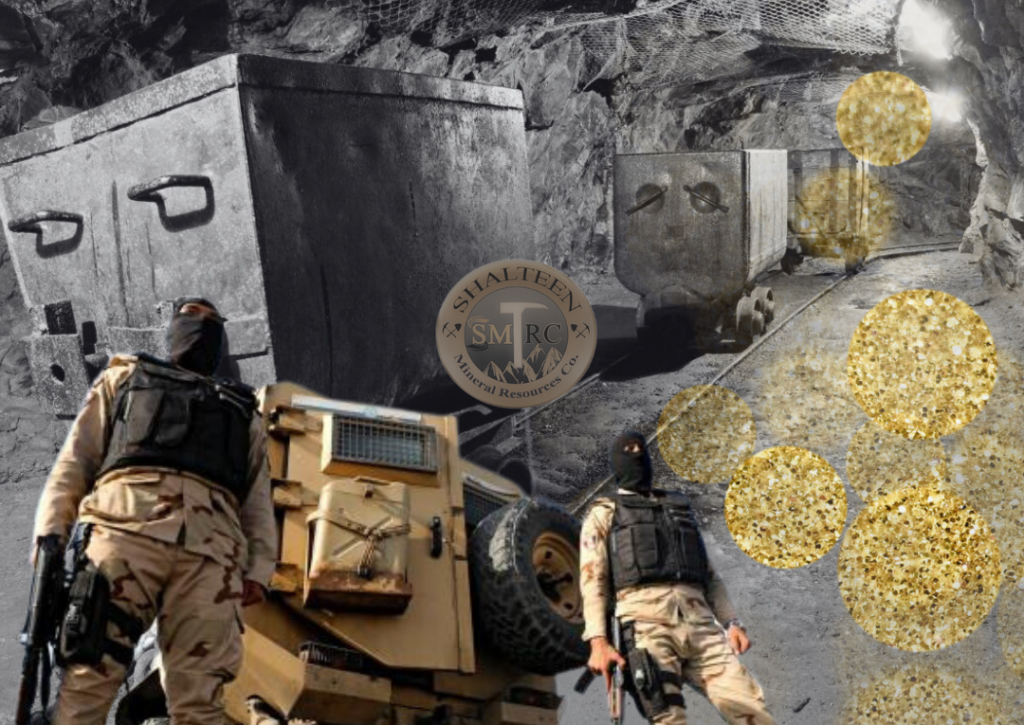
On July 17th, 2023, the Refugees Platform in Egypt (RPE) was informed of casualties, injuries, and the detention of a large number of foreign workers in gold mines in the Shalateen area; they were later forcibly deported. This occurred as part of a series of raids conducted by Egyptian military forces on a mining site known as “Salah Mine,” which lasted for days. The Egyptian military forces resumed raids on “Salah” and other mines in the region, and they are still ongoing.
The RPE has followed up on the situation’s development with primary sources informed about the conditions of migrant workers there. It spoke with several survivors among the workers at the site, as well as activists, Sudanese community leaders in southern Egyptian governorates, and lawyers working on cases of foreign workers in Egypt.
Throughout this report, the RPE tracks the chain of events that have unfolded at the “Salah Mine” since mid-July of last year, including the fate of migrant workers there following military raids on the site and other locations. It also examines the conditions of migrant workers in mining areas in southern Egypt and the challenges of mining operations that cast shadows over the lives of migrant workers.
Testimonies of fatalities, injuries, and missing individuals, in addition to the forced deportation of migrant workers to Sudan.
-
Timeline of Events
According to testimonies of survivors among the workers who witnessed the attack, the raid was not the first nor the last. However, it was the largest, involving a significant number of military forces accompanied by aerial coverage. There was random gunfire and detention of several miners, while their tents were set on fire, and their belongings destroyed, including the market located below the mining wells, which the workers rely on for food. This was an attempt to prevent them from returning to this area again.
Based on information gathered and verified by various sources, the Egyptian army began a reconnaissance mission on Saturday, July 15th, between 7:00 and 7:30 in the morning. An army force, comprising 14 SUVs loaded with soldiers, visited the “Salah” mine located adjacent to the Wadi el Gemal Reserve, along the Marsa Alam/Abu El Hassan El Shazly Road, in the middle of the Eastern Desert, administratively belonging to the city of “Shalateen” in the Red Sea Governorate.
The miners received the army forces at the Salah mine and spoke with the commander of the accompanying force. According to witnesses, the miners took photos with the officers and smoked some cigarettes with them; their meeting was amicable. The army force did not instruct the miners to stop mining or leave the area. Instead, they took some photos of the site and left, with the responsible officer informing them they would return later.
One of the miners who spoke with the RPE suggested that the force had come to shut down the miners’ work. However, the officers “were surprised by the number of workers there, which was twice the number of the force, so they only photographed the area without executing the raid operation.”
Sunday, July 16th, passed without the arrival of any army forces. However, tragedy struck before the arrival of Monday, July 17th, as a large-scale raid on the “Salah” mine area began at 6:20 in the morning. A large army force comprising 20 large Ural vehicles (personnel carriers) in addition to the small SUVs that came on the first day, initiated the raid. Furthermore, a military helicopter flew at a low altitude over the mining area, and some witnesses reported seeing it dropping petroleum substances into the open wells.
The attack continued until 15:00. It began with the military forces storming the market area located below the mining sites, destroying and burning everything in it completely, according to what was corroborated by witnesses and confirmed by video footage authenticated by the RPE. Then, the forces chased the workers who hurriedly exited the mining wells upon hearing gunfire and the nearby aircraft. They were later stopped and many were arrested by authorities.
According to one eyewitness, the number of those detained on the first day of the raid exceeded a thousand individuals. Another witness stated, “They destroyed the entire market and burned it down. They arrested many people, more than a thousand, and took them to the company in Hameeda, and from there to Shalateen.” Here, “the company” refers to the Shalateen Mineral Resources Company office in the Municipality of Jabal Bani Hamida.
Before the raid came to an end on that day, which lasted for over nine hours, the military forces had arrested hundreds of workers at the mine, demolished the entire market, and burned the miners’ living quarters to the ground. Additionally, the troops deliberately damaged the mining wells by hurling stones or petroleum-based substances inside and igniting them. This operation resulted in the destruction and closure of the wells, injuries to several workers due to rocks falling into the wells where they were working or sheltering from the raid, or the aftermath of the wells being set ablaze.
According to an eyewitness: “When some young men saw what was happening, they entered the well, and one of the soldiers saw them and threw rocks at them inside the well, breaking someone’s back. We later heard he had died. Two other young miners took shelter in another well, and the forces poured in gasoline and set it on fire. After the raid was over, the people got the young men out, one with serious burns and the other deceased.” However, another close source to “Salah Mine” reported that the fire did not result in any casualties.
At six o’clock on Tuesday, July 18th, the same forces repeated the attack, accompanied by aerial support. The forces arrested those they were able to catch, and the workers who got tired and descended from the mountain to surrender themselves, while the rest of the workers continued to hide inside the mining wells, which the army continued to target and destroy.
“I was with a group, there were more than ten of us. We entered a well, but one of us came down late and saw a soldier. We heard them talking about wanting to set the well on fire, but they didn’t have gasoline nearby. We stayed inside the well for ten hours. We were lucky because the well had an opening on the other side, so we managed to exit from there after 10 hours. When we came out, we found the entire place burned down and destroyed,” said one of the Sudanese workers who were there during the raid. By midday, around 16:00, the workers began to emerge from the wells after confirmation that the forces had left.
On Thursday, July 19th, the military raids by the Egyptian forces came to a halt, however, the food and water crisis started affecting the remaining mine workers. Food had run out, and after the market burned, there was nothing left. Furthermore, the raids halted the water supply provided by individuals in the area tasked with transporting the water to the workers at the mine. According to eyewitnesses, the water scarcity facilitated the forces’ mission, who raided the mine again on Thursday and Friday, July 20th and 21st, as workers became extremely exhausted.
One of the workers said, “Thousands of workers surrendered themselves during these two days due to water and food scarcity, which made it impossible for them to survive in this scorching hot weather and harsh conditions. Therefore, getting arrested was better than dying from hunger or thirst.”
One of the survivors who spoke to the RPE says: “I was with a group of young men and we had water that we shared. We would sit in the grotto all day and come out at night. On Thursday night, we ran out of water, and there was nowhere near where we could get water. One group decided to go to another mine, and another decided to go to the company, while a third group and I headed to Aswan.”
The witness continues, “We walked 4 kilometers, and then we found a car whose owner agreed to take us to Aswan. On our way, we met another group, so we ended up being over twenty people. We arrived in Aswan on Friday morning.”
What is the Situation of Migrant Workers in the Gold Mining Field?
And What is the Fate of the Workers at “Salah” Mine After the Continuous Raids?
Mining in southern Egypt attracts tens of thousands of migrants of various African nationalities, mostly from North Sudan, and to a lesser extent from South Sudan, Eritrea, and Ethiopia. Most workers have entered the country through official routes, with some being registered with the United Nations High Commissioner for Refugees (UNHCR) as asylum seekers. While some entered the country to work in mining, others turned to mining after facing difficulties finding other work, with their ages ranging from fifteen to over forty years. One of the older workers in the area says, “There used to be women who cooked for the miners, but now everyone in the mines is male.”
“In the desert, it doesn’t matter who has a residence and who does not, they’re all equal,” says one of the survivors.
Activists from the Sudanese community report that over the past years, areas of gold mining and exploration have witnessed numerous disappearances: “Not a week goes by without reports of disappearances from families of Sudanese youth who ventured into the desert in search of gold.” Testimonies from community leaders indicate that this “mining” work attracts many immigrant youths due to the lack of employment opportunities for them.
A lawyer who works on providing legal support for some migrant workers explains that since migrants are “prohibited from working officially anyway, there is no difference between working in the mine or outside it since they do not enjoy legal protection and labor rights.”
Workers in the mines operate without formal contracts or defined salaries or wages. Instead, they follow a customary system to calculate wages based on the amount of gold extracted by each group. The trader is responsible for providing water, food, and gasoline to the workers inside the mining wells. The groups working in the mines form new communities with different laws and rules, as workers often consider each other brothers.
During interviews with some of the workers, they reported the existence of graves inside the mines where workers are buried in case of death due to extreme heat or falling rocks.
One of the surviving workers from the raids on the Salah mine, a Sudanese university graduate, recounted his journey: “I started working there in February of last year after I had learned about the job through Sudanese brothers. The situation was stable, and the number of workers in the mine was more than ten thousand, most of us Sudanese, with other brothers from South Sudan and Ethiopia. Every day, we would go out to work, and food, water, and gasoline would be provided to us until the attack happened. I waited for three days, and then the food and water ran out, so I left with a group heading to Aswan. The situation was terrifying amid gunfire and the fear of getting lost in the desert without water.”
Sudanese community leaders report that workers at the “Salah Mine” informed them of deaths resulting from the raids, where two workers were found dead inside the mining wells due to thirst and hypoxia. Additionally, eight bodies were found in the desert, having died from dehydration. Another worker died from a severe back injury after the army forces threw large rocks into the well where he sought refuge. He was not provided medical assistance, resulting in his death. Furthermore, some workers reported that 17 workers died on their way to the company’s office in Shalateen, which is located 31 kilometers away from the mine site. Workers also said a worker died days later due to burns on his body sustained during the raids.
While the RPE was unable to access official documents regarding the deaths, witnesses reported that the deceased were buried in a designated area near the mine site as is customary, without the usual official and legal procedures.
Some of the workers injured during the raids remain in the mines, while others have relocated to Aswan Governorate in the days following the raids. Some survivors have chosen to continue working in the mine and are still doing so, while others have decided to move to Aswan Governorate, especially with the depletion of water among some groups of workers and the continuous raids.
The Refugees Platform in Egypt has reviewed video footage showing the deportation of hundreds of detained Sudanese nationals by the Egyptian authorities. It also documented testimonies recounting the assembly of these individuals at specific points before their deportation to the Sudanese city of Oseif in the Red Sea State. The RPE spoke with several deportees who said they could not estimate the total number of people deported with them but acknowledged it exceeded hundreds.
The Egyptian authorities gathered them inside the Shalateen Mineral Resources Company before transporting them successively at night to the outskirts of Oseif. The RPE was unable to conduct a full count of deportees. However, local Sudanese media outlets reported that around 7,000 workers of various African nationalities, including women and children, were deported. Sources from the Red Sea State stated that residents of Oseif lodged complaints with local authorities, expressing concerns about the large influx of workers into the city. Consequently, local authorities arranged for the transfer of hundreds of them via large trucks to the city of Port Sudan.
Meanwhile, survivors, community leaders, and families have reported the disappearance of dozens of individuals. Two of them, according to their families, disappeared after being arrested by the forces that arrived at the mine and dispersed it. Additionally, workers have reported the disappearance of others after they moved into the desert.
“They prevented them from drinking water, and then they burned down the mine. Those trying to survive would go to the government, drink water, and get into the cars. This is how a large number of them drank water and got into their vehicles, while others died there due to dehydration,” said one Sudanese community leader familiar with the situation of Sudanese workers in the mines.
“Salah Mine”
The Salah mine, named after “Salah Gomaa,” its first discoverer, is located adjacent to the Wadi El-Gemal Reserve, along the Marsa Alam/Abu Al-Hassan Al-Shazly Road, in the middle of the Eastern Desert, close to the Egyptian-Sudanese border and near Hamid Mining Company. Administratively, it falls under the jurisdiction of Shalateen City, which belongs to the Red Sea Governorate. Salah Gomaa shares ownership of the mine with several security figures, according to Mada Masr.
In recent years, the owners disagreed over the percentage of ownership, which some suggest is the reason behind the recent attack. However, researchers indicate that the primary reason behind the attack was an attempt by the armed forces to curb informal gold mining activities in the area, with the main goal of setting boundaries on unofficial mining operations in the region.
The entity responsible for issuing mining licenses in the area is the Shalateen Mineral Resources Company, whose ownership structure is distributed as follows: 35% to the Egyptian Mineral Resources Authority, 34% to the National Services Projects Organization, 24% to the National Investment Bank, and 7% to the Egyptian Company for Mineral Resources.
According to its official website, the company aims to regulate the conditions of workers engaged in informal gold mining in the Eastern Desert, collect state rights, and maximize the benefit from Egypt’s natural resources. It is also developing a plan which aims to develop its activities to include exploration of gold and minerals independently or in partnership with local and international companies, to maximize the utilization of Egypt’s natural resources.
At the end of 2014, President Abdel Fattah El-Sisi ratified a new law on mineral wealth, which outlined the procedures for obtaining mining licenses, contracting, tendering, and awarding mines and quarries, “without being bound by the regulations governing tenders and auctions.” The law also imposed new fees and royalties on the activity.
On April 7, 2023, Shalateen Mineral Resources Company announced a bid for gold exploration and exploitation rights in five areas in the Eastern Desert. These areas include Fatiri, Barramiya, Umm Ud, and Hamata. The closing date for submitting bid offers was set for August 10th.

Image Source: Egyptian Mineral Resources Authority, Egyptian Ministry of Petroleum and Mineral Resources, Egypt.
The mine employs thousands, mostly from Northern Sudan, with a smaller proportion from South Sudan, Eritrea, and Ethiopia.
The major attack launched by government forces on the mine did not deter the minors from returning to work at the border mine. After a period following the raid, the miners returned to the mine, albeit in smaller numbers. However, forces have continued their raids and pursuit of the miners, with the latest being on August 12th, 2023. The raids have extended to other mines such as El-Inglizi, Aqabat, Abqar, and other areas near Hamida Mining Company, reaching Alalaqi area south of the desert.
Most of the exploration and mining areas are located in specific zones classified as military zones (restricted and prohibited) according to Presidential Decree No. 444 of 2014, and its amendments promulgated by Decree No. 420 of 2021, which defines the border areas and the regulations governing them. Therefore, the authorities responsible for granting permits for presence and passage through the area are the military authorities in the region.

The map attached to Presidential Decree No. 420 of 2021 of the designated areas in the southern direction, Official Gazette No. 38, bis (B) on September 23, 2021.