 Skip to content

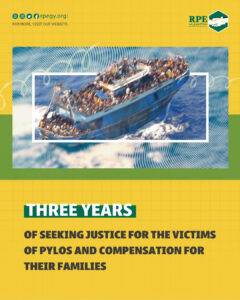
Five years have passed since the sinking of the “Prophet’s Convoy,” a fishing boat carrying between 450 and 600 irregular migrants from Sudan, Syria, Somalia, Eritrea, and Egypt. According to survivors’ testimonies, the boat sank on Wednesday, September 21, 2016, in the Mediterranean Sea, 12 kilometers from the shores of Rashid city.
This tragedy claimed the lives of 204 people, as per official statements by the Egyptian Ministry of Health and authorities on September 27, 2016. However, residents of Rashid, who stayed on the Mediterranean coast for days, reported retrieving over 300 drowned bodies. Additionally, officials from Beheira announced the burial of 52 unidentified bodies from the boat, following a public prosecutor’s decision to bury the bodies whose identities remain unknown to this day.
According to survivors, the smugglers returned their mobile phones once the boat began to sink. They contacted their relatives in nearby areas, who were close enough to pick up a signal. One researcher who studied the incident explains, “They were so close that their phones caught a signal.” Some victims tried calling the emergency police number, only to have the operator treat it as a joke and end the call without completing it.
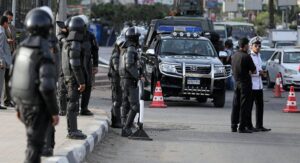
In television and newspaper interviews, residents from “Borg Rashid” and “Borg Moghizel” on the Mediterranean coast in the Kafr El-Sheikh and Beheira governorates said that local coastguard authorities were informed of the boat sinking in nearby territorial waters but refused to respond, stating they were “waiting for instructions from the navy command.” Furthermore, the coastguard authorities prevented locals from attempting rescue operations with their own fishing boats, threatening that anyone who tried would be stopped and charged with unlicensed sailing. Rescue operations only began more than 10 hours after confirmation of the boat’s sinking, which was carrying women and children.
In Case No. 4974, Administrative Rashid, 2016, 17463 Criminal, related to the Rashid boat sinking, 57 individuals were accused—despite the fact that Law No. 82 of 2016, addressing the combat of irregular migration, had not been issued at that time. Fifty-six defendants were sentenced to prison terms ranging from two to 14 years, while one female defendant was acquitted.
The investigation documents reveal a variety of defendants, including the boat owner, seven crew members, two supporting brokers, and 14 owners and crew members of other boats used to transport the victims from shore to the doomed vessel. The main defendant in the case, “Youssef M. A.,” was responsible for preparing and organizing the journey of the “Rashid Boat.”
None of the police officers stationed at coastal checkpoints near the site of the sinking were among the defendants, despite Rashid residents reporting in televised and press interviews that the coastguard did not respond or move to rescue the boat during its distress.
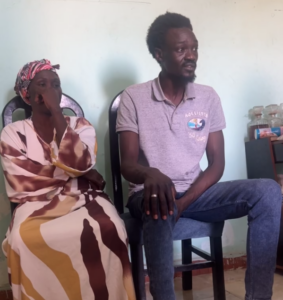
The documentary The Rashid Boat, broadcasted by Alaraby TV in October 2018, revealed visual and audio evidence of the Egyptian border guards’ complicity with the smugglers and their failure to save the victims as the boat sank before their eyes. The documentary featured interviews with several survivors and smugglers.
Five years of loss, with the drowning of dozens of women, children, and young people in one of the most harrowing scenes Egypt has witnessed in recent years, and the true culprits of this disaster remain unaccountable